
Brazilian court orders Nestlé and 3Corações supplier to prevent slavery in coffee production
Repórter Brasil · Por Igor Ojeda
(há 1 hora)
Publicado originalmente em Repórter Brasil ↗ · Uso: CC BY-ND 4.0 (conteúdo jornalístico)
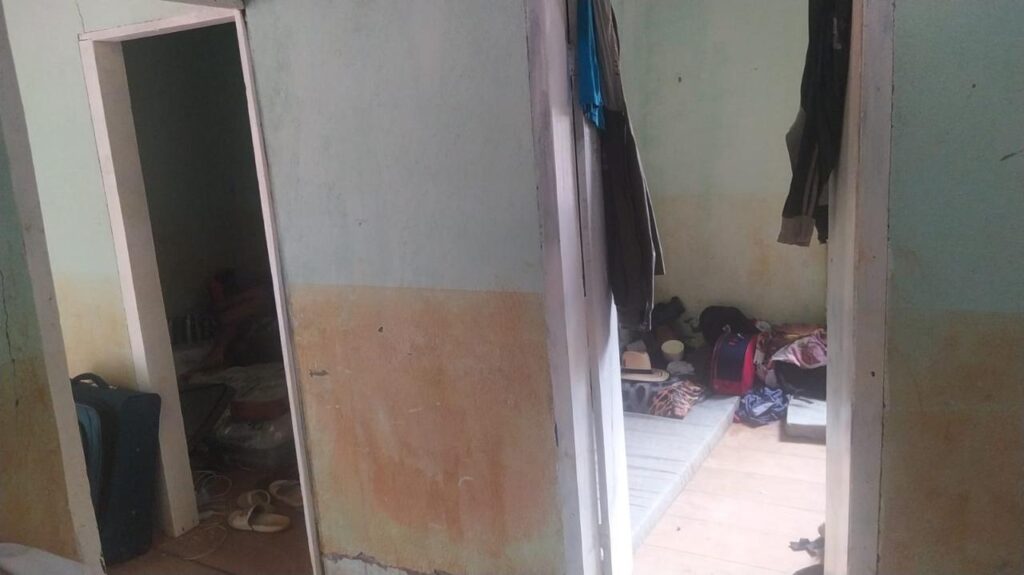
A BRAZILIAN LABOUR COURT has ordered Cooabriel, the São Gabriel Coffee Growers’ Agricultural Cooperative, which supplies major companies including Nestlé and 3Corações, to take measures to prevent slavery-like conditions and other labour rights violations in its supply chain.
The cooperative, which describes itself as Brazil’s largest in the conilon coffee sector, has approximately 10,000 members. Conilon is commonly used to make instant coffee.
The injunction, issued on 28 October by the 13th Labour Court of Vitória, state of Espírito Santo, partially grants requests made in a public civil action filed a week earlier by the Labour Prosecutor’s Office (MPT). The lawsuit seeks R$10 million (US$ 1.8 million) in damages for collective harm and lists ten cooperative members who were reported to the authorities or investigated in 2025 and 2026 on suspicion of subjecting workers to slavery-like conditions.
Among the cases cited is the rescue of ten workers at Sítio Mata Verde, in Vila Pavão, Espírito Santo, in May 2023, reported in July 2025 by Repórter Brasil, in partnership with Swiss organisation Public Eye. In the lawsuit, the MPT also says its inquiry drew on an investigation by the two organisations that compiled information on slave labour in coffee production.
Asked for comment, Cooabriel said it “has not been formally notified of any labour court ruling in a public civil action” and “reserves the right to comment after receiving formal notification”.
It also said it “regularly checks” the Ministry of Labour’s “Dirty List” — a register of employers found to have subjected workers to slavery-like conditions — and provides training for members, “particularly on slavery-like conditions and child and adolescent labour” (Read the full response here).
Cooabriel supplies coffee to multinationals
Based in São Gabriel da Palha, Espírito Santo, Cooabriel is listed among Nestlé’s suppliers and publicises its participation in the Grown Respectfully programme, which the Swiss multinational describes as “the largest sustainability programme in coffee farming”.
Meanwhile, the Sustainability Report of 3Corações, which describes itself as Brazil’s largest coffee producer, states that the company received “recognition from the São Gabriel Coffee Growers’ Agricultural Cooperative (Cooabriel) as the cooperative’s largest customer” in 2023.
Customs data analysed by Repórter Brasil also indicate that, in 2026, Cooabriel exported coffee to France’s Sucden, one of the world’s largest agricultural commodity traders, and to American Coffee Corporation, a US coffee importer.
The MPT’s lawsuit also names Starbucks as one of the cooperative’s major customers.
Cooabriel holds two certifications from 4C – Certification for Climate, Conservation and Communities, a scheme that sets standards for sustainability and respect for labour rights.
ASSINE NOSSA NEWSLETTER
Submit
In response to Repórter Brasil, Nestlé said it “maintains an active commercial relationship with the cooperative and clarifies that all coffee purchased comes from certified farms”. It added that the properties cited in the lawsuit are not part of Nestlé’s supply chain. “As this is a preliminary injunction rather than a final judgment, Nestlé will monitor developments with Cooabriel,” it added.
Also contacted, 3Corações said it was seeking “clarification from the relevant parties”. “When there are final court judgments, entries in public exclusion registers or technical findings of non-compliance with the provisions of our General Contracting Rules, we immediately take appropriate action,” it wrote.
Sucden, in turn, said that “has purchased small volumes of coffee from Cooabriel during the last 3 years, representing less than 1% of its coffee supplies”, and that it was reviewing its transactions with the cooperative.
American Coffee Corporation and Starbucks had not responded by the time of publication.
Meanwhile, 4C said that, although the ruling is preliminary, “takes allegations of forced labour, degrading working conditions and other human-rights violations extremely seriously”. It added that it was assessing the information available and that this review “may result in additional follow-up activities, enhanced monitoring, requests for further information or other measures deemed appropriate based on the facts established”.
Citing “confidentiality, data protection, contractual obligations and accreditation requirements”, 4C did not disclose which Cooabriel member operations are certified.
Read the full responses from the companies that commented here.
‘A very important step in tackling slave labour’, prosecutor says
In the injunction, labour judge Germana de Morelo ordered Cooabriel to stop buying coffee from producers involved in slave labour and suspend purchases from properties where workers had been rescued until there is proof that working conditions have been brought into compliance.
The cooperative must also implement a plan to prevent violations and monitor its suppliers, including regular audits and unannounced inspections. The ruling further requires it to provide the MPT with a list of contractors or members throughout its supply chain.
Failure to comply could result in a daily fine of R$ 30 thousands (US$ 5.5 thousands) for each obligation reached. The claim for R$ 10 million (US$ 1.8 million) in damages for collective harm, however, was not addressed in the injunction, which is provisional and was issued before the cooperative submitted its defence.
In her ruling, Morelo stressed that allegations of slave labour involving “several members of the defendant cooperative” were well documented. “The contemporary legal framework requires large economic organisations to act preventively in governing their supply chains,” she wrote.
Speaking to Repórter Brasil, labour prosecutor Guadalupe Louro Turos Couto, one of the prosecutors behind the lawsuit, said the ruling represented “a very important step in tackling slave labour”.
“When we find slave labour on a farm, however small, the producer receives notices of violation and is held accountable. But if nothing happens to the cooperative that buys from that producer, it benefits and ends up profiting from that slave labour,” she stressed.
Labour prosecutors identify gaps in monitoring cooperative members
In the lawsuit that led to the 28 October ruling, the MPT says Cooabriel checks its members against the Dirty List and the Serasa Experian Agro platform, but questions how effective these measures are in preventing violations. Prosecutors argue that the cooperative should also directly inspect working conditions on its members’ properties.
One problem identified by the MPT is that employers may only be added to the Dirty List years after slave labour is detected. During that period, producers involved in violations can continue selling coffee to the cooperative without checks against the register flagging the problem.
“Companies only stop buying after the damage has already been done. For a producer to appear on the Dirty List, someone must already have been enslaved, a rescue operation must have taken place, and the authorities must have gone through the entire process,” Couto says.
The MPT’s investigation also identified differences in the monitoring procedures applied to members. Although Cooabriel says it checks records to identify labour violations, it told prosecutors that certain producers linked to Nestlé supply programmes receive on-site visits from technical staff, who inspect accommodation and working conditions.
The lawsuit argues that the cooperative “deliberately places itself in a position of ignorance and inaction regarding slavery-like working conditions among its suppliers/producers, while continuing to enjoy the economic advantage resulting from the labour of enslaved workers”. It adds: “By acting in this way, it helps and encourages producers and intermediaries to continue committing serious human rights violations.”
As part of the investigation, labour prosecutor Guadalupe Louro Turos Couto visited farms belonging to Cooabriel members during the coffee harvest. “I found very little concern for decent working conditions at the worksites,” she reports. Among the violations she describes were a lack of toilets, drinking water and areas for rest and meals in the fields.
“Coffee ends up cheap because farm owners do not meet their labour, social security and tax obligations, while the other links in the supply chain reap the profits,” she warns.

25 anos investigando para mudar.
A Repórter Brasil já ajudou a impulsionar leis, fortalecer direitos e combater o trabalho escravo.
Em 2026, fazemos 25 anos — e vem muito mais por aí!
Leia também
The post Brazilian court orders Nestlé and 3Corações supplier to prevent slavery in coffee production appeared first on Repórter Brasil.